Python is one of the easiest languages to start, but tutorials can make it feel like homework. Programming games help because every loop, condition and function has a visible consequence. You are not just printing examples; you are moving a hero, solving a puzzle or automating a farm.
## Why games are good for learning Python
Python is readable enough that beginners can understand the shape of a program before they understand every detail. That makes it a natural fit for games: command a character, inspect the world, choose an action, repeat. The feedback arrives visually, which helps connect abstract syntax to concrete behavior.
The best Python learning games do not merely ask you to memorize keywords. They make you use variables, loops, comparisons, functions and debugging in context. If a condition is wrong, the character walks into danger. If a loop is inefficient, the farm produces less. If a function is too narrow, the next level exposes it.
That said, games should not be your only learning source. Pair them with a simple reference or course so you can look up concepts when the game moves quickly. The game gives motivation and feedback; the reference gives names and explanations.
## Best games for learning Python
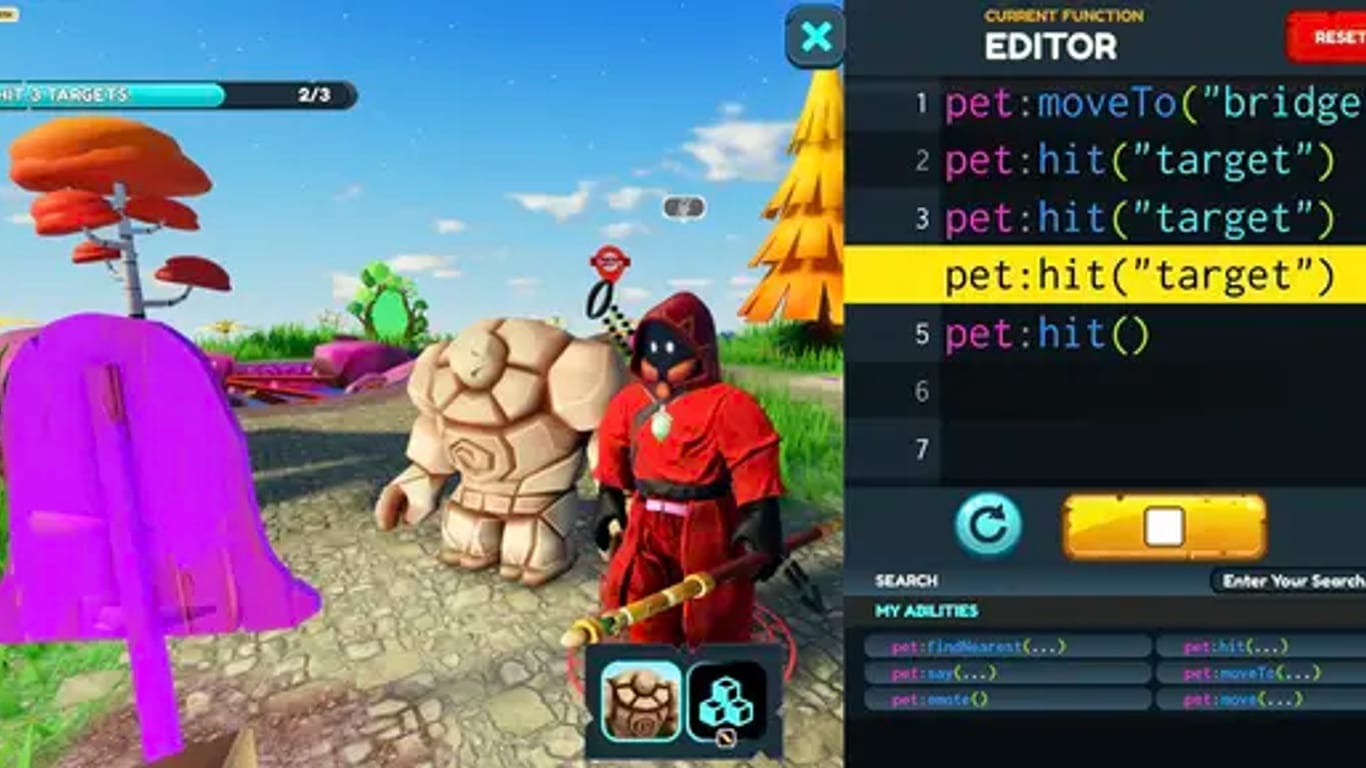
Learn Python or JavaScript by playing a top-down RPG where every move is a line of code you write.
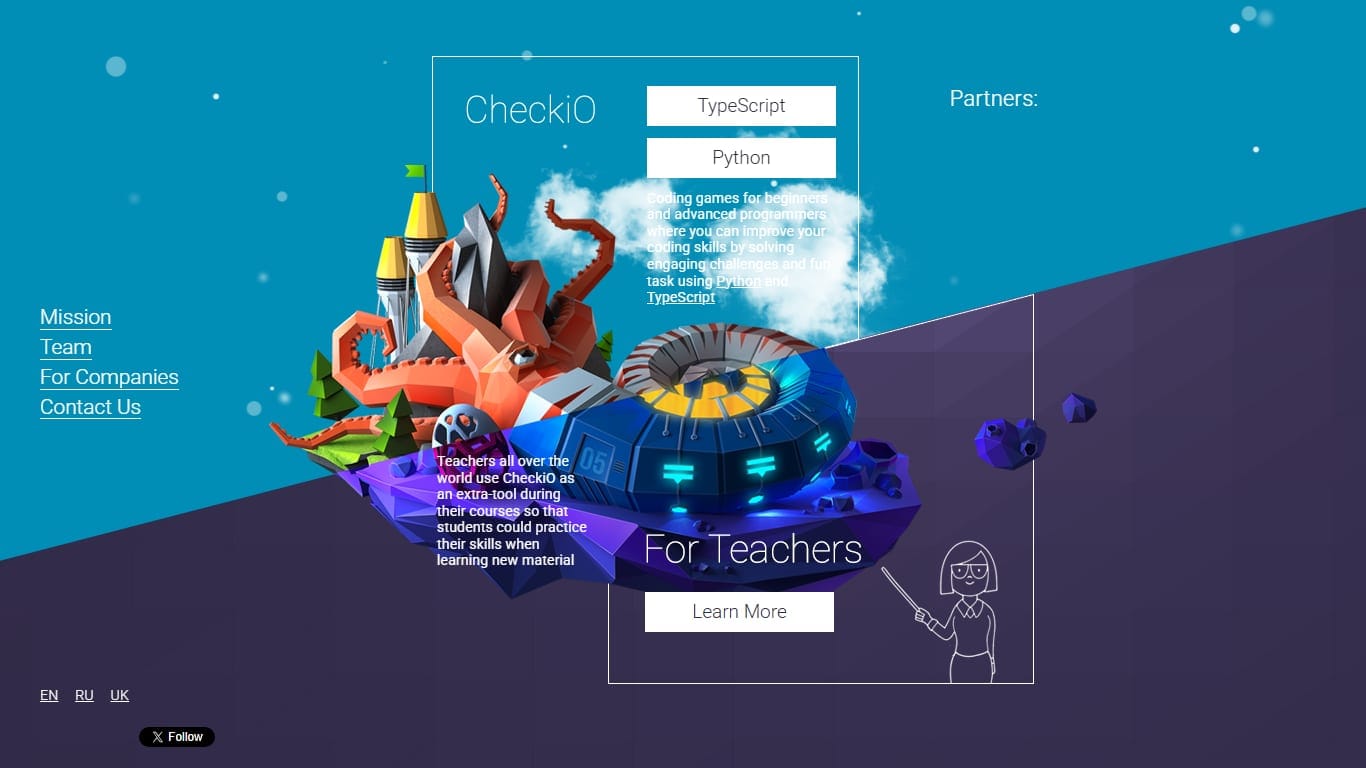
Level up Python and JavaScript by solving puzzles, then read everyone else’s solutions to the same problem. Learn by comparing.
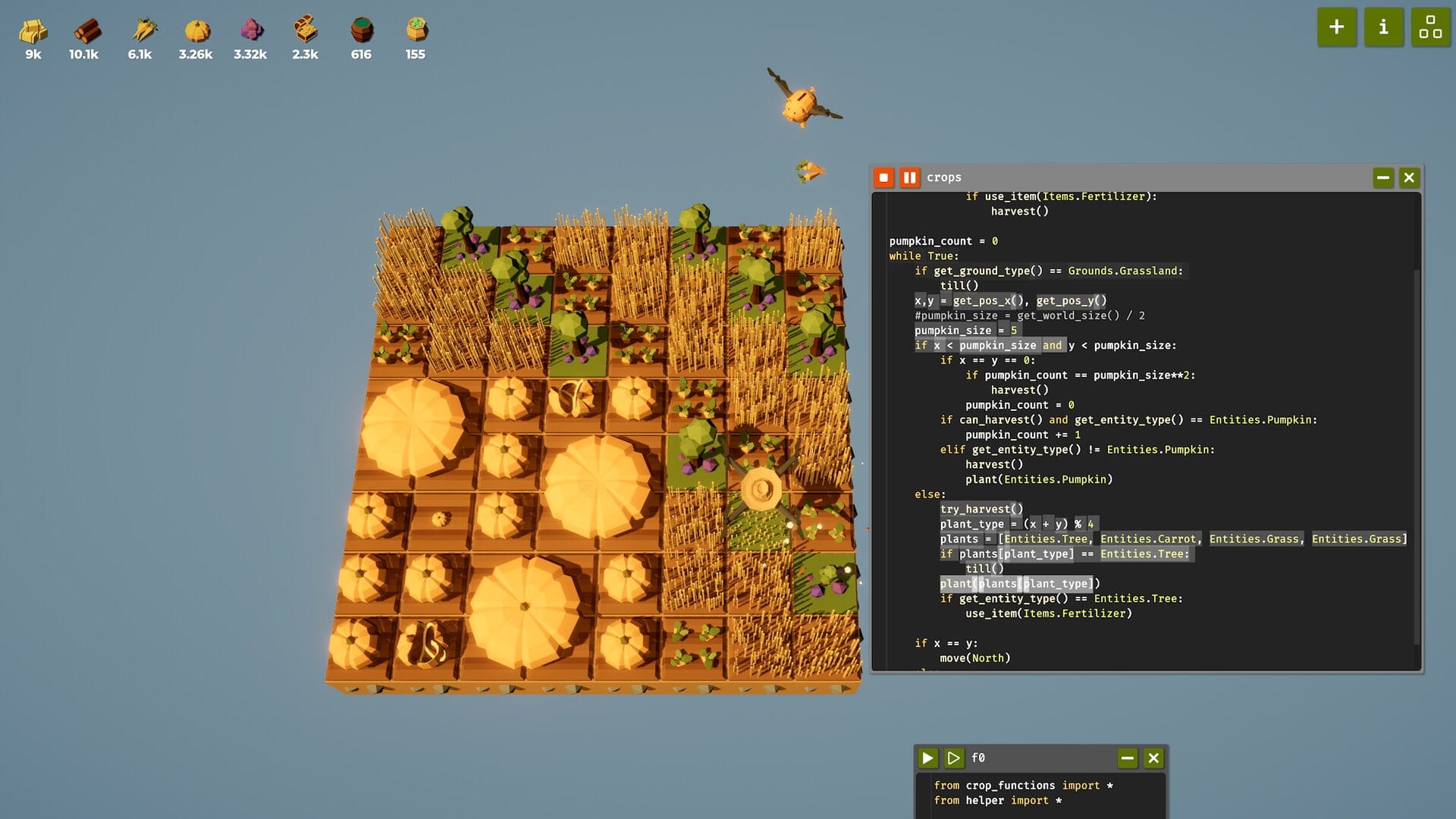
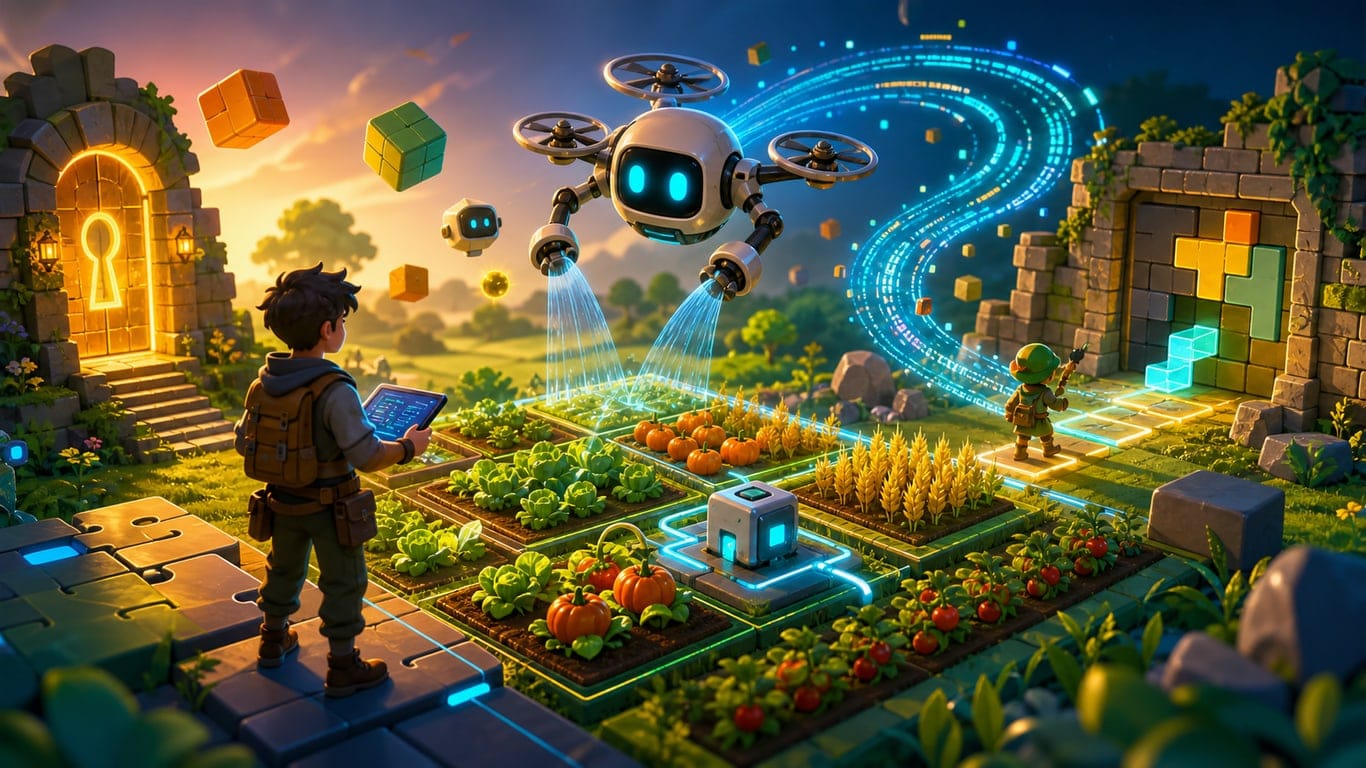
Program a drone to automate an entire farm. Plant, harvest, optimise — then watch your code outgrow you.
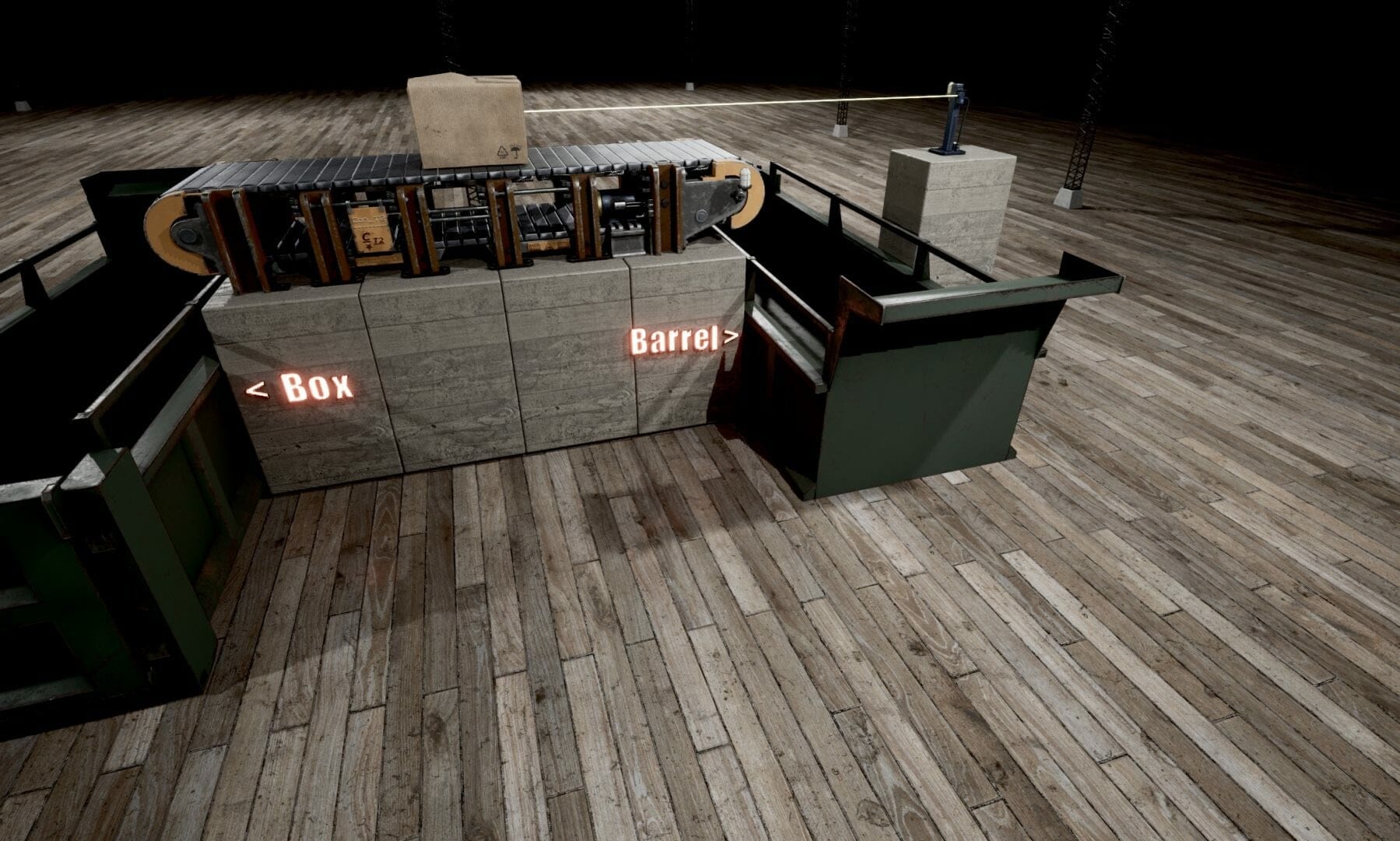
Write real Python to control robots, drones and machines in a physics-driven engineering sandbox.
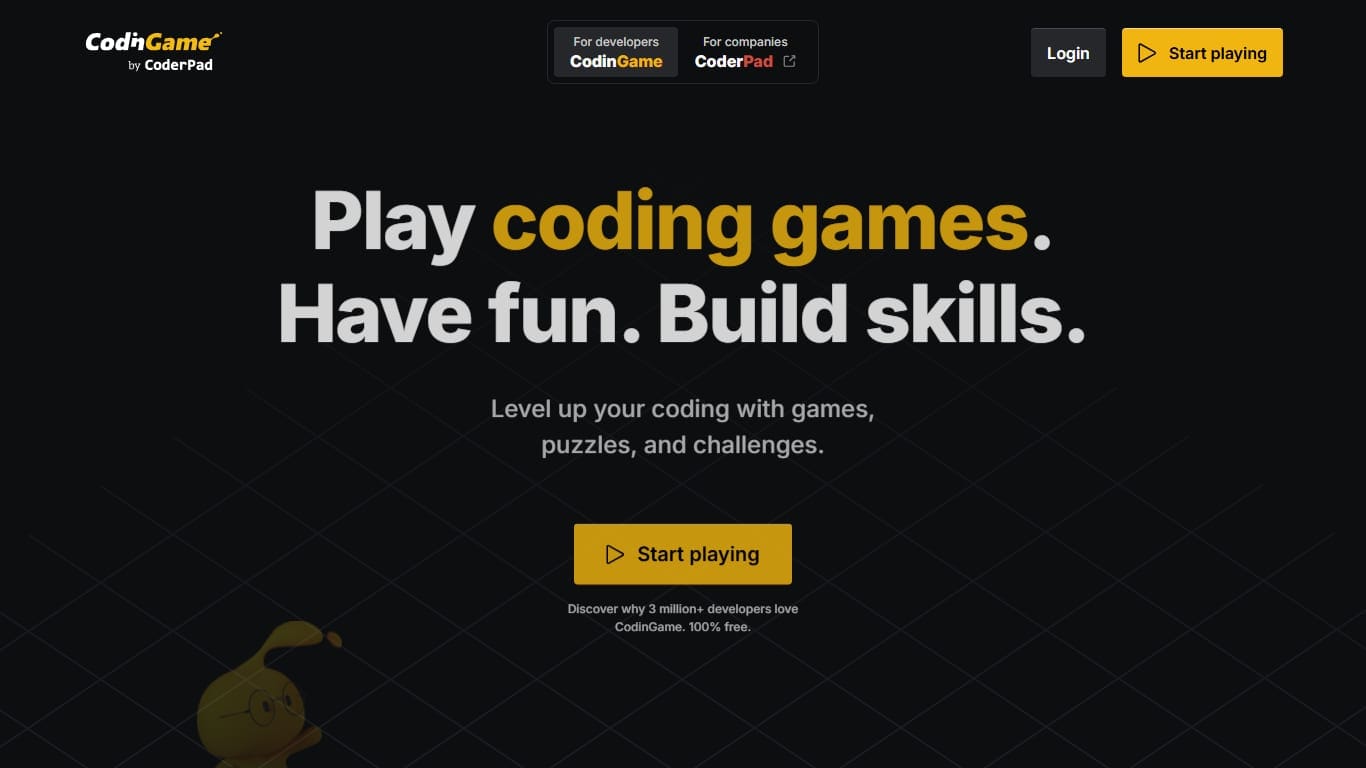
Solve puzzles and fight other players’ bots in real-time arenas. Write in 25+ languages and watch your code play out as an animated game.
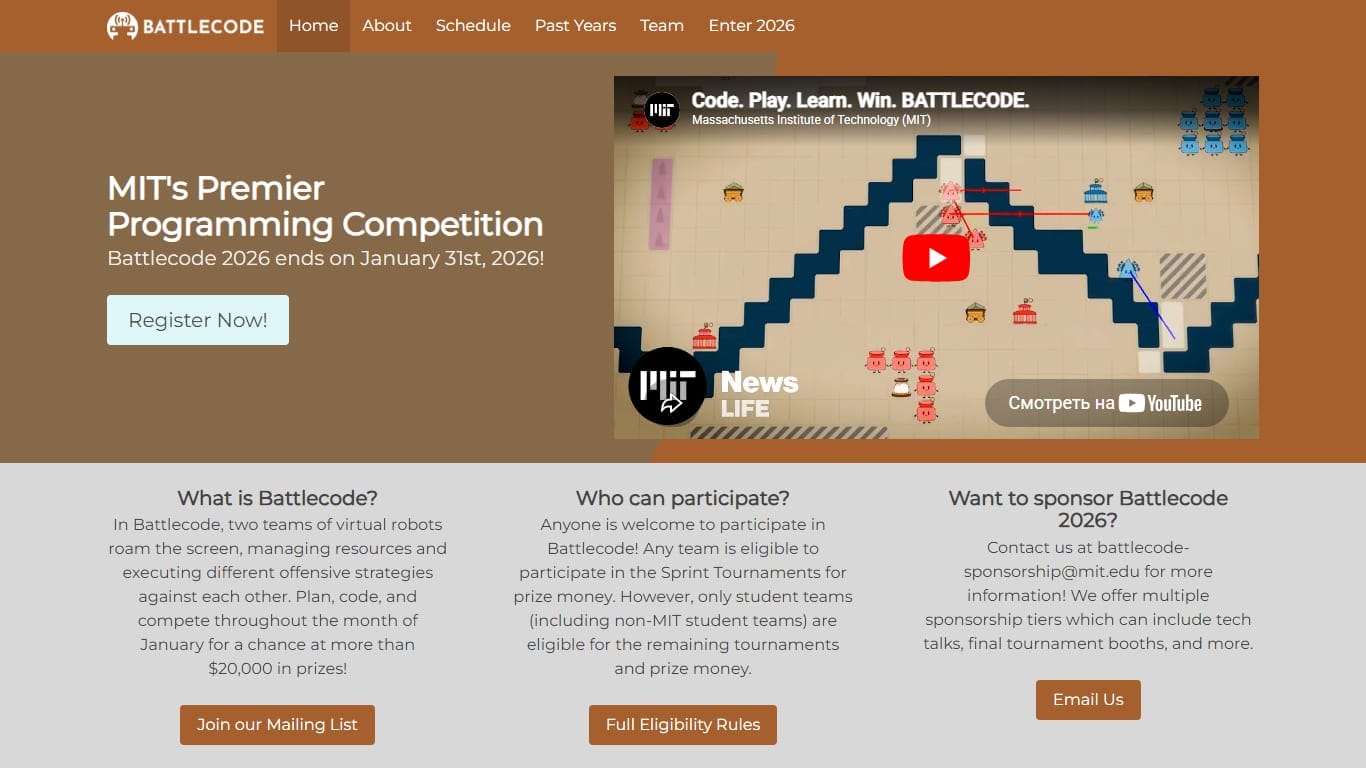
MIT’s annual AI programming competition. Command an army of bots with distributed strategy and battle other teams for the title.
CodeCombat is the friendliest first stop because it wraps Python commands in an adventure structure. CheckiO is better once you know the basics and want small, focused puzzles. The Farmer Was Replaced turns Python-like scripting into automation, which makes loops and functions feel valuable. JOY OF PROGRAMMING is more ambitious and expects comfort with real programming ideas, physics and problem decomposition.
## A beginner-friendly Python path
- →Start with CodeCombat if you have never typed Python before.
- →Move to CheckiO when variables, if statements and loops feel familiar.
- →Use The Farmer Was Replaced to practice automation and reusable routines.
- →Try CodinGame when you want algorithm puzzles and bot battles.
- →Try Battlecode or JOY OF PROGRAMMING when you are ready for larger systems.
The order matters because each step removes a support. CodeCombat gives a strong visual frame. CheckiO asks you to solve cleaner standalone problems. The Farmer Was Replaced makes you manage a growing process. Competitive games add opponents and edge cases.
## Python concepts these games actually reinforce
Loops become natural because games repeat. A drone keeps harvesting, a bot keeps scanning, a hero keeps checking for enemies. Conditions become natural because the world changes: if health is low, retreat; if a tile is empty, plant; if an enemy is close, attack.
Functions become useful when repetition becomes annoying. Once you write the same movement or harvesting logic three times, a helper function stops being an abstract lesson and becomes relief. Lists and dictionaries become useful when you need to track resources, targets, coordinates or units.
Debugging is the hidden curriculum. Games make bugs less mysterious because the failure usually appears on screen. The player can ask: what did I expect the program to do, what did it actually do, and which line made that decision?
## A tiny automation mindset
A good early Python habit is to write code that describes decisions, not just actions. Even in a simple farm or robot game, the pattern is the same: inspect state, choose the next step, then repeat.
while True:
    if can_harvest():
        harvest()
    elif ground_is_empty():
        plant(best_seed())
    else:
        move_to_next_tile()
That example is not tied to one game; it is the shape of automation. Once you recognize the pattern, Python stops feeling like a list of syntax rules and starts feeling like a way to describe behavior.
## Common mistakes when learning Python through games
The first mistake is copying solutions too early. Reading good code is useful, but only after you have struggled enough to understand what problem the code solves. The second mistake is ignoring error messages. In a game, it is tempting to hit run again and hope. Slow down and read the line number.
The third mistake is staying too long in guided environments. Once you can solve beginner levels, move to a game that gives less structure. Real learning happens when you decide what to automate, not only how to fill in a blank.
## Final advice
If you want the gentlest start, choose CodeCombat. If you want puzzle reps, choose CheckiO. If you want to feel why automation matters, choose The Farmer Was Replaced. If you already know some Python and want a bigger challenge, try CodinGame, Battlecode or JOY OF PROGRAMMING.