Robot programming games make code feel embodied. Your program is not just calculating an answer; it is moving something with sensors, limits and consequences. That is why the genre has lasted from Core War and Robocode to modern automation sandboxes and visual swarm games.
## Why robot programming games work
Robots are perfect teaching objects because they make state visible. A robot has a position, a direction, a goal and a limited view of the world. If the code is wrong, the robot gets stuck, misses a target, wastes time or loses a fight. The feedback is immediate without being shallow.
The best robot programming games also teach robustness. A script that works in one clean situation may fail when an enemy moves differently, a resource is missing, a path is blocked or two workers collide. That forces players to think beyond the happy path.
Robot games come in two broad types: arenas, where your bot competes against other bots, and puzzles or sandboxes, where your robot solves tasks in an authored environment. Both are useful, but they reward different habits.
## Bot arenas: code against code
Arena games are the sharper option if you want competition. Your code is tested by opponents who do not care about your intended solution. That makes them excellent for learning defensive programming, sensing, prediction and iterative improvement.
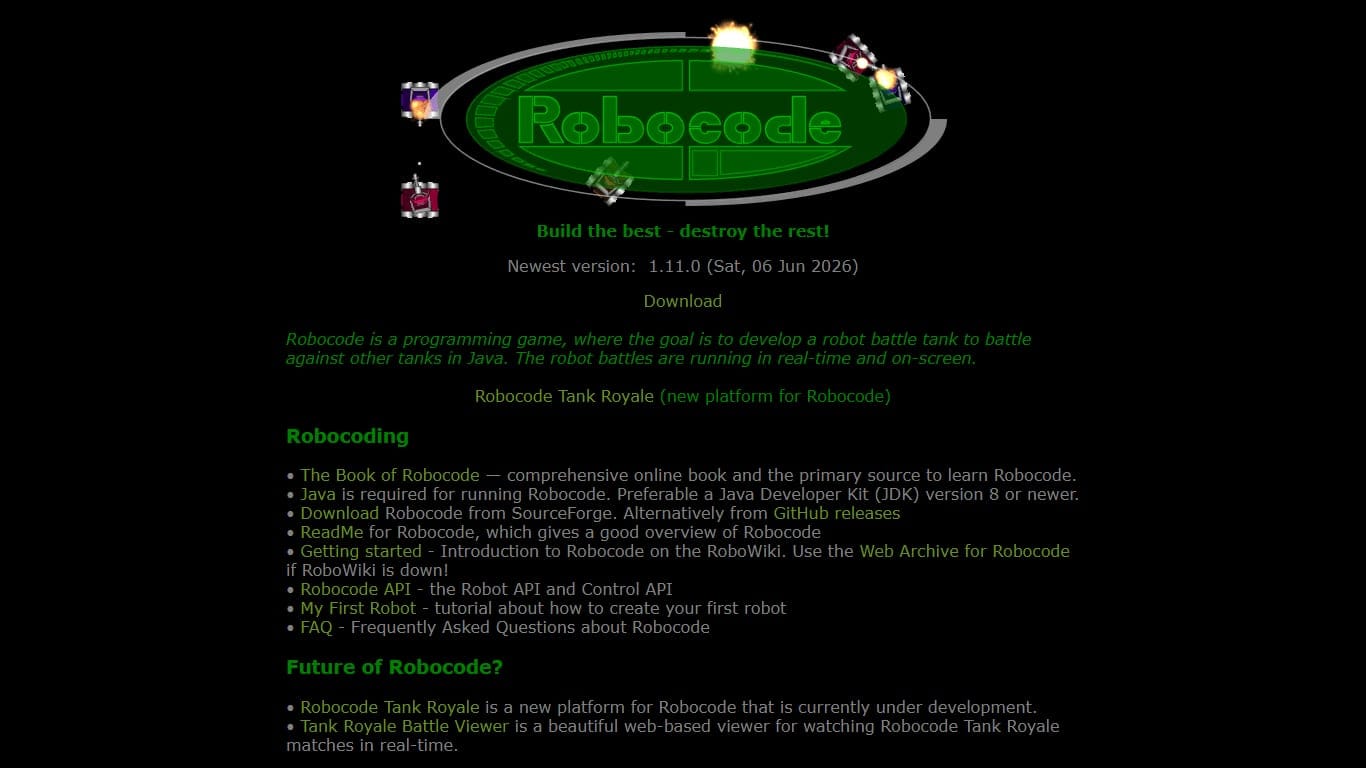
Build a robot tank, code its brain in Java or .NET, and drop it into the arena. The classic that taught a generation to program by battling bots.
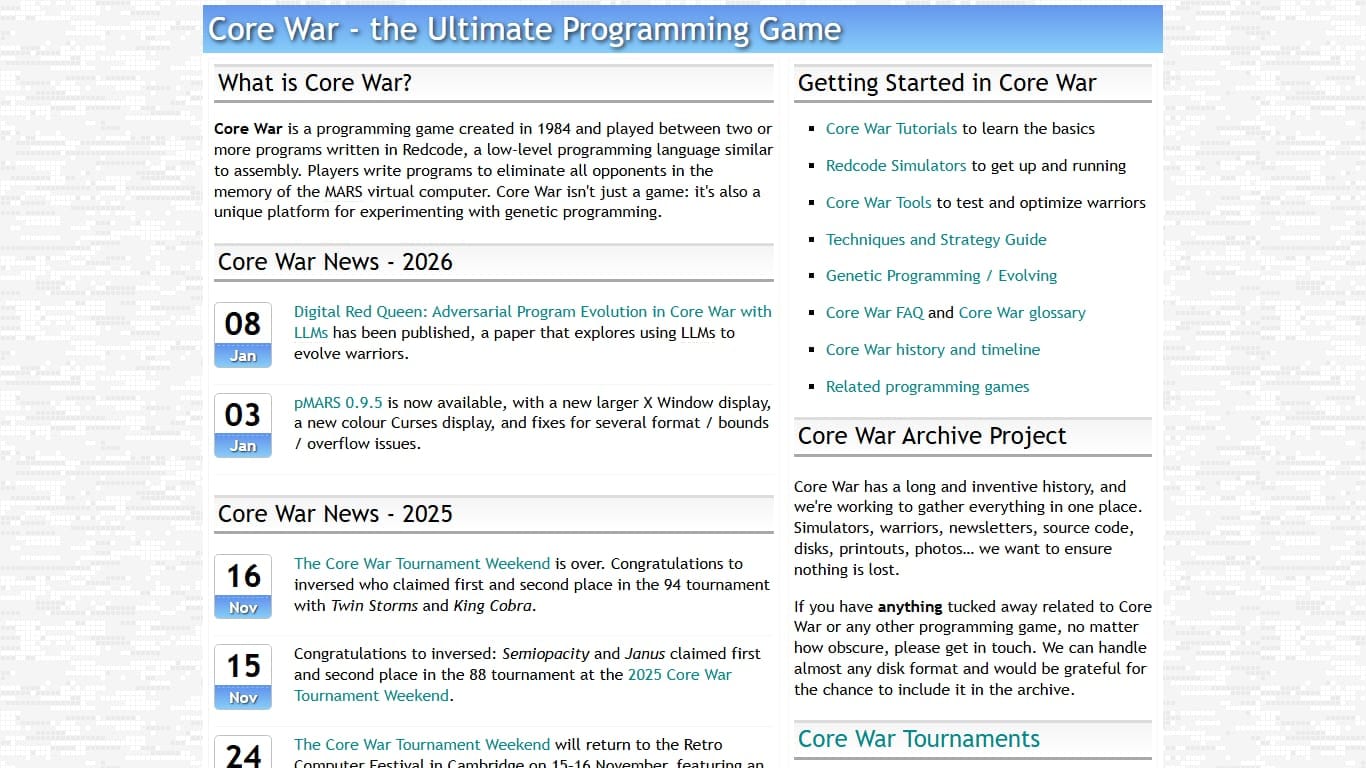
Two programs in Redcode fight for control of a virtual computer’s memory. The 1984 ancestor of every bot-battle game.
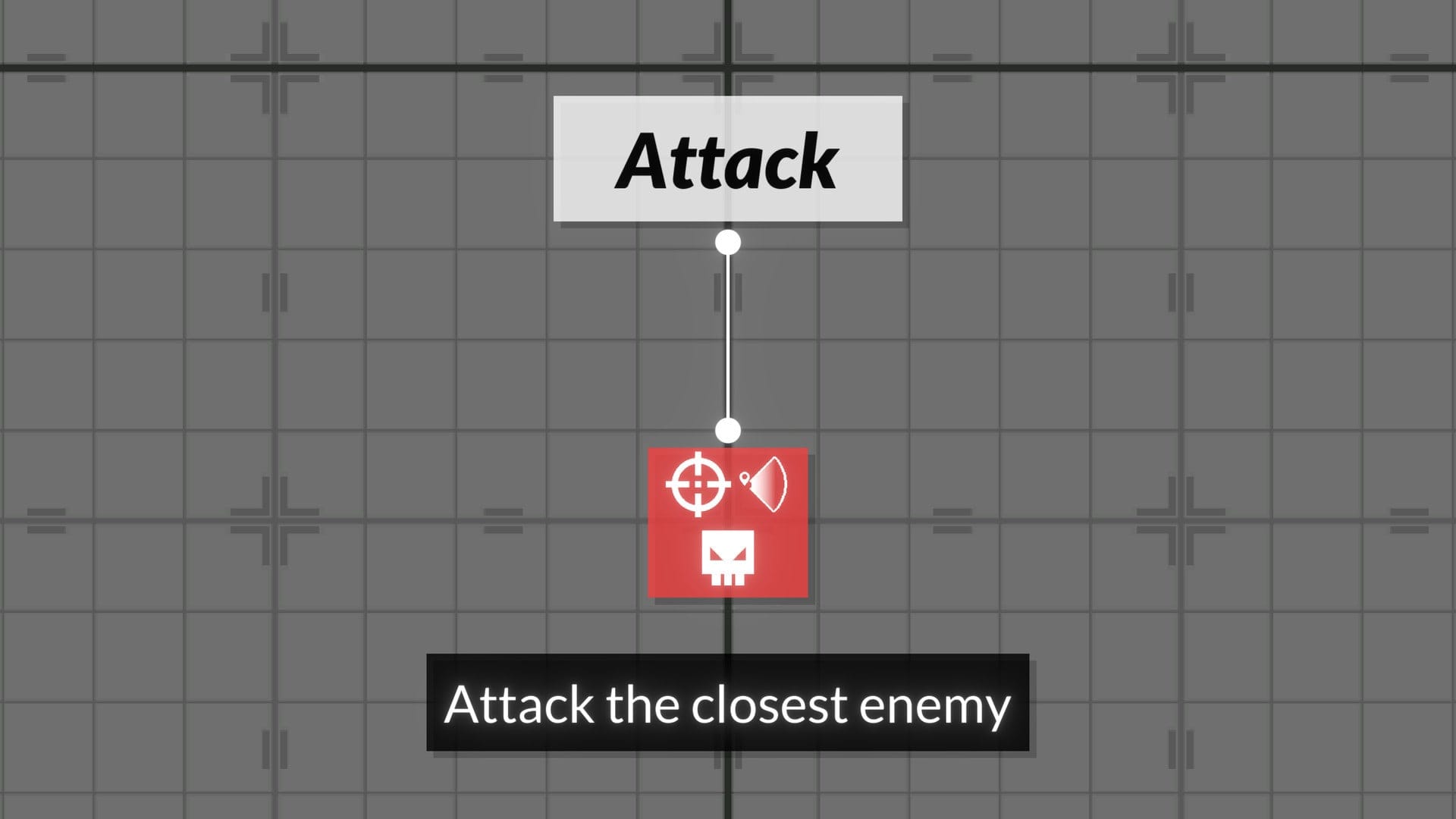
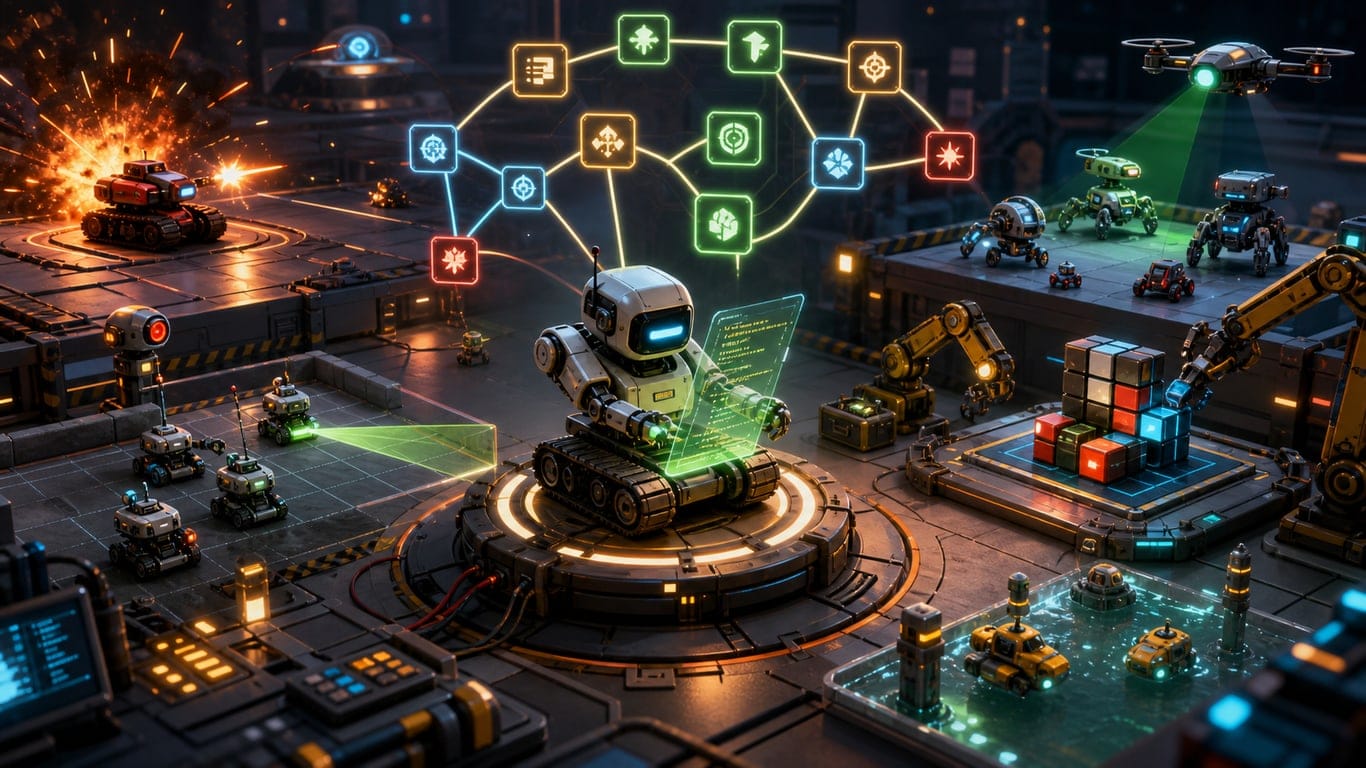
Design the AI behaviour tree for a squad of robots, then iterate match after match until your tactics dominate.
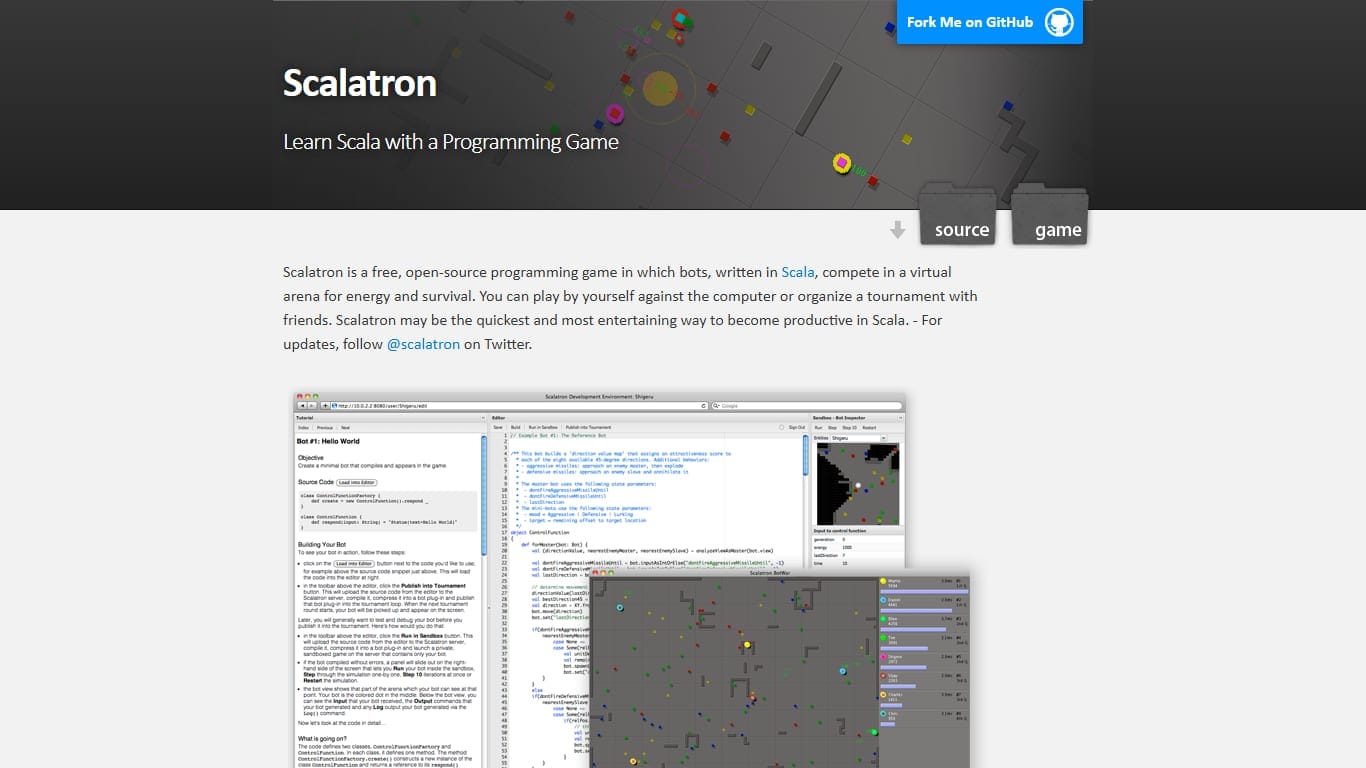
Learn Scala by writing a bot that competes against others in a simple open-source arena.
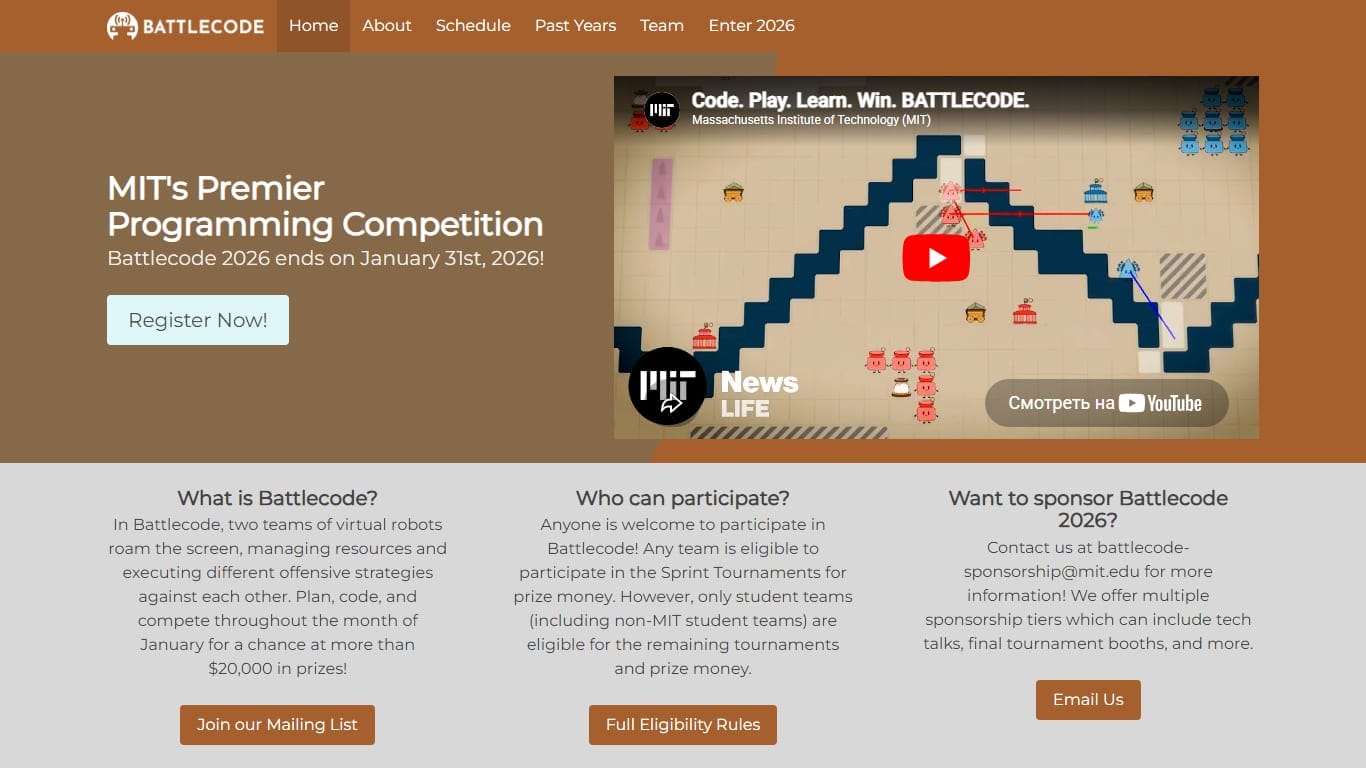
MIT’s annual AI programming competition. Command an army of bots with distributed strategy and battle other teams for the title.
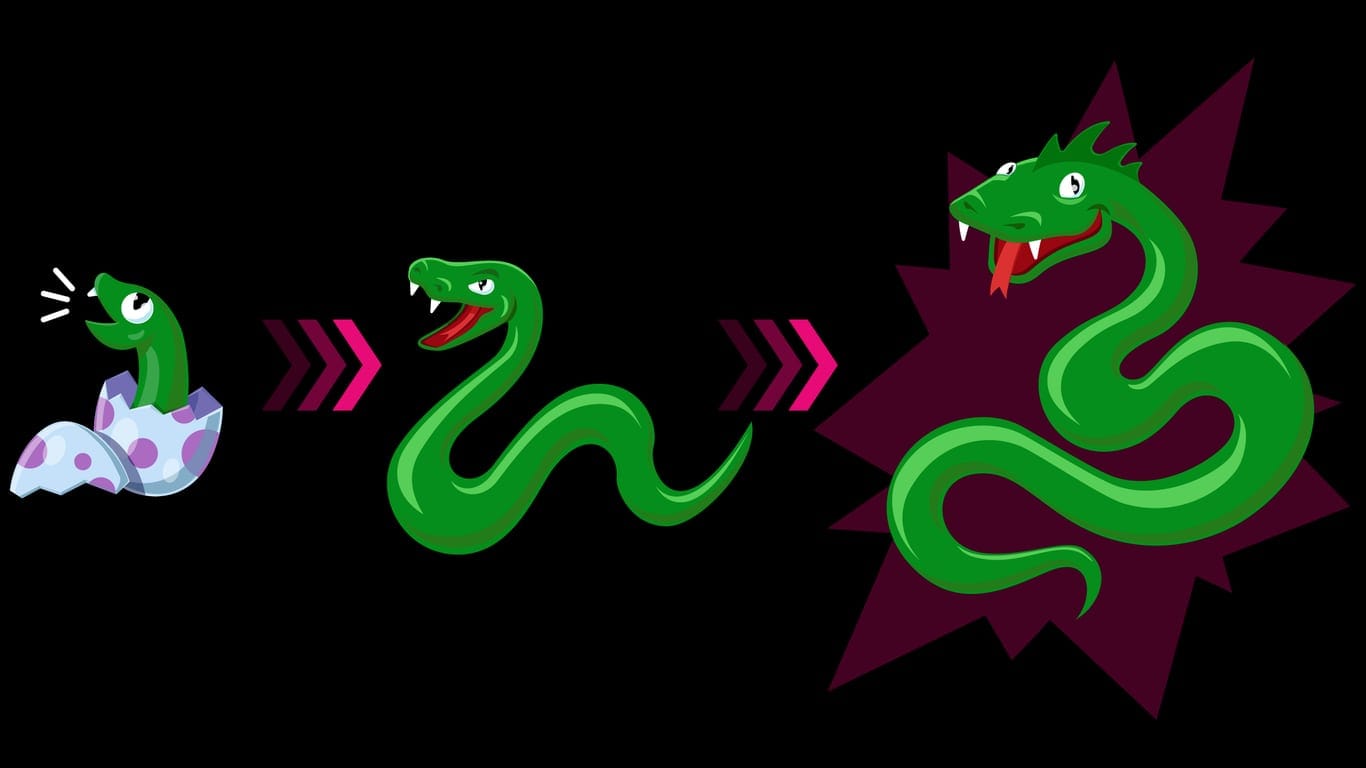
Build a web server that controls a snake, then battle other developers’ snakes in a multiplayer arena.
Robocode is still the classic because the fantasy is clear: write a tank brain, enter the arena, watch radar, movement and gun logic interact. Core War is older and more abstract, but its code-vs-code memory battle remains foundational. Gladiabots lowers the syntax barrier with visual AI logic, while Scalatron, Battlecode and Battlesnake push players toward more explicit bot architecture.
## Robot puzzles and automation sandboxes
Puzzle-focused robot games are better when you want to learn step by step. They give you a machine, a level and a clear objective, then ask you to express the behavior that gets there. The challenge is less about outsmarting an opponent and more about decomposition.
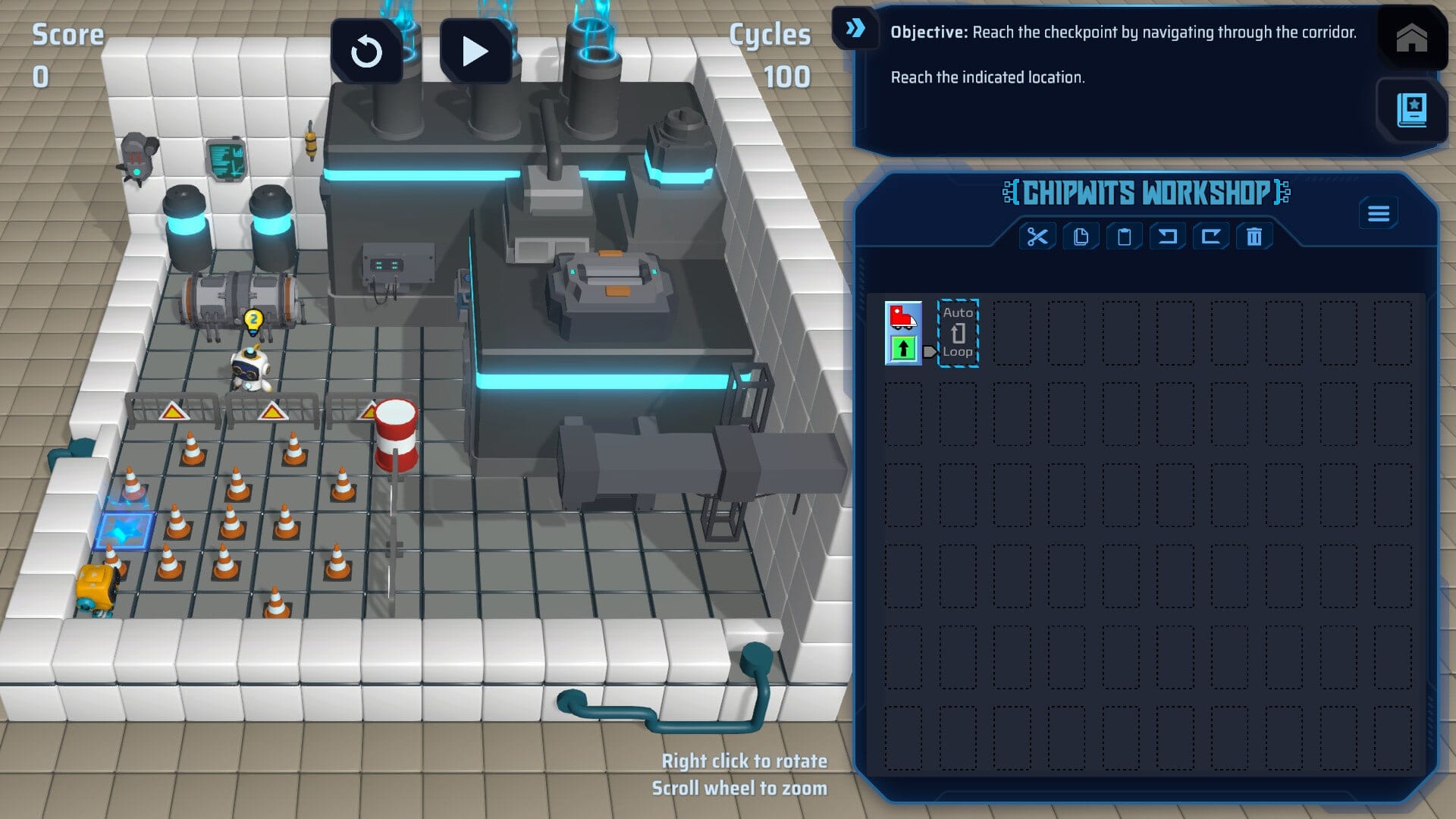
A modern remake of the 1984 classic: program a cute robot with visual chips to navigate logic puzzles.
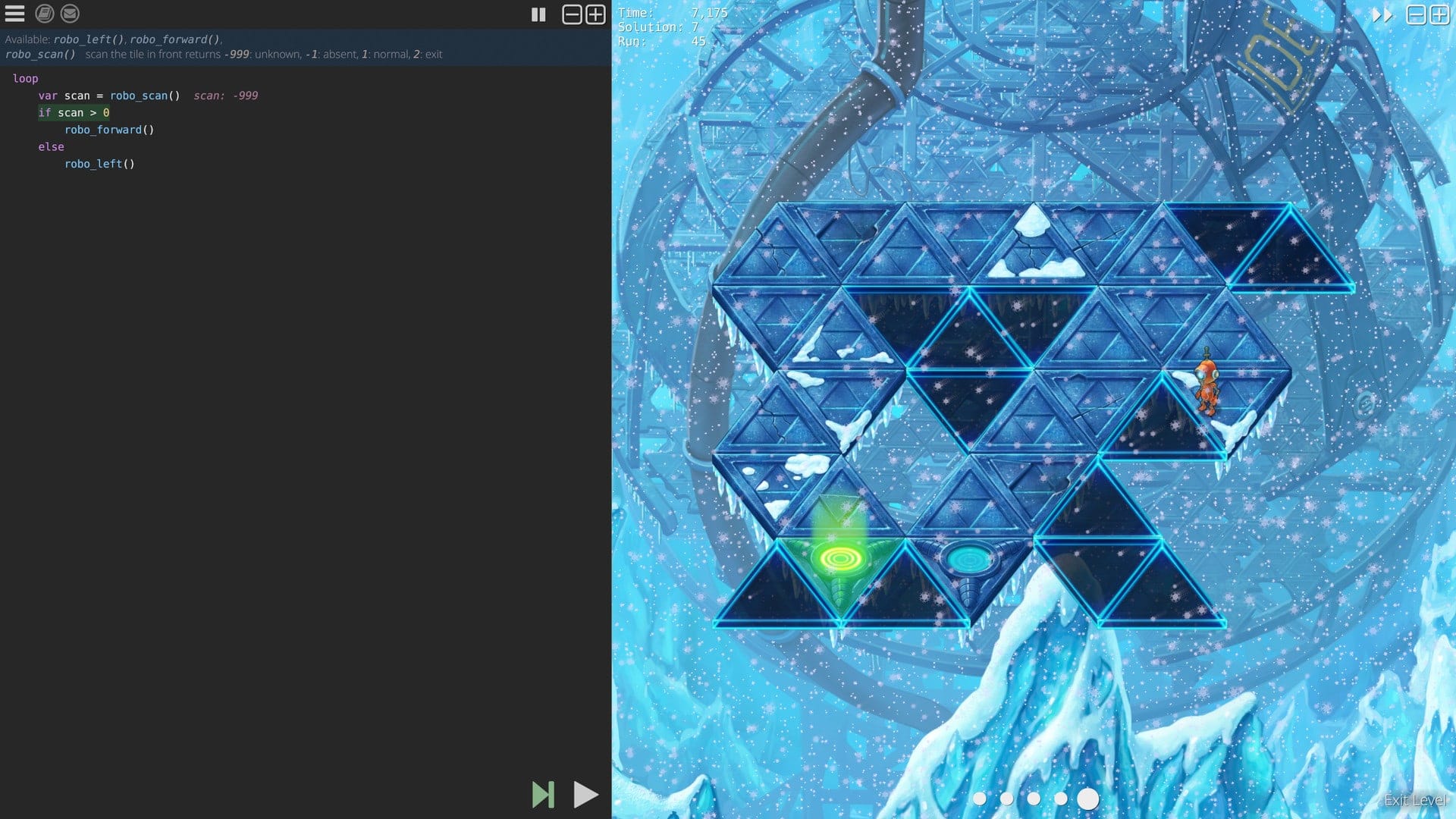
Guide a robot through alien ruins by writing instructions in a clean, purpose-built language — no prior coding needed.
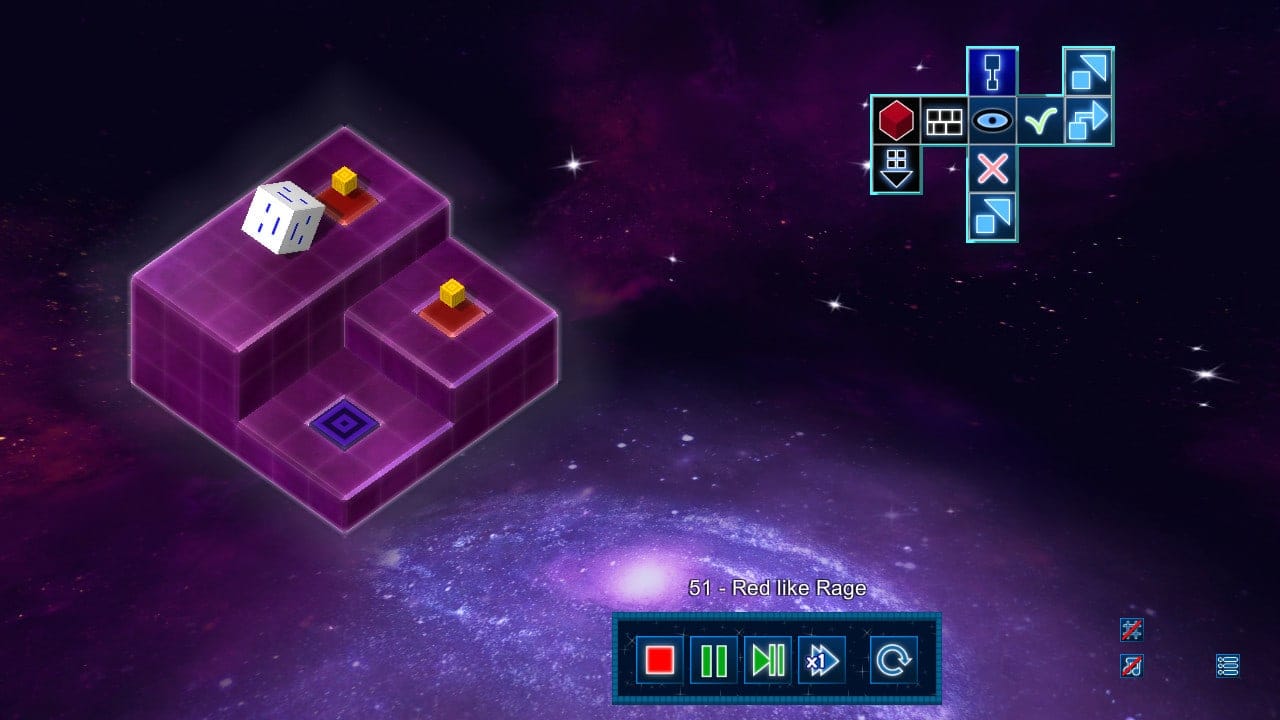
Program armies of cube-robots with a symbolic visual language to solve sprawling 3D spatial puzzles.
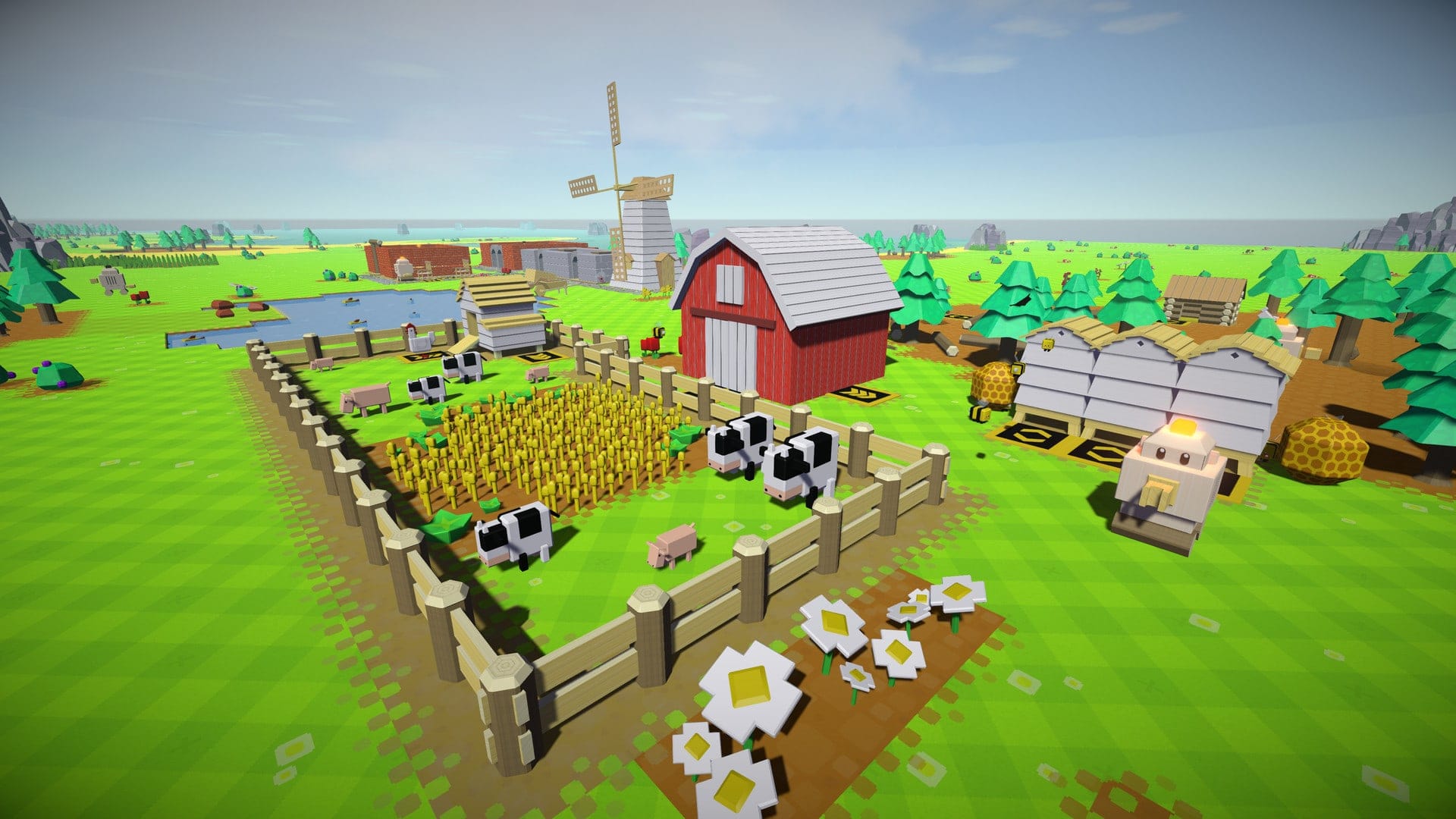
Colonise an empty world by programming wobbly little bots with drag-and-drop scripts until they run everything for you.
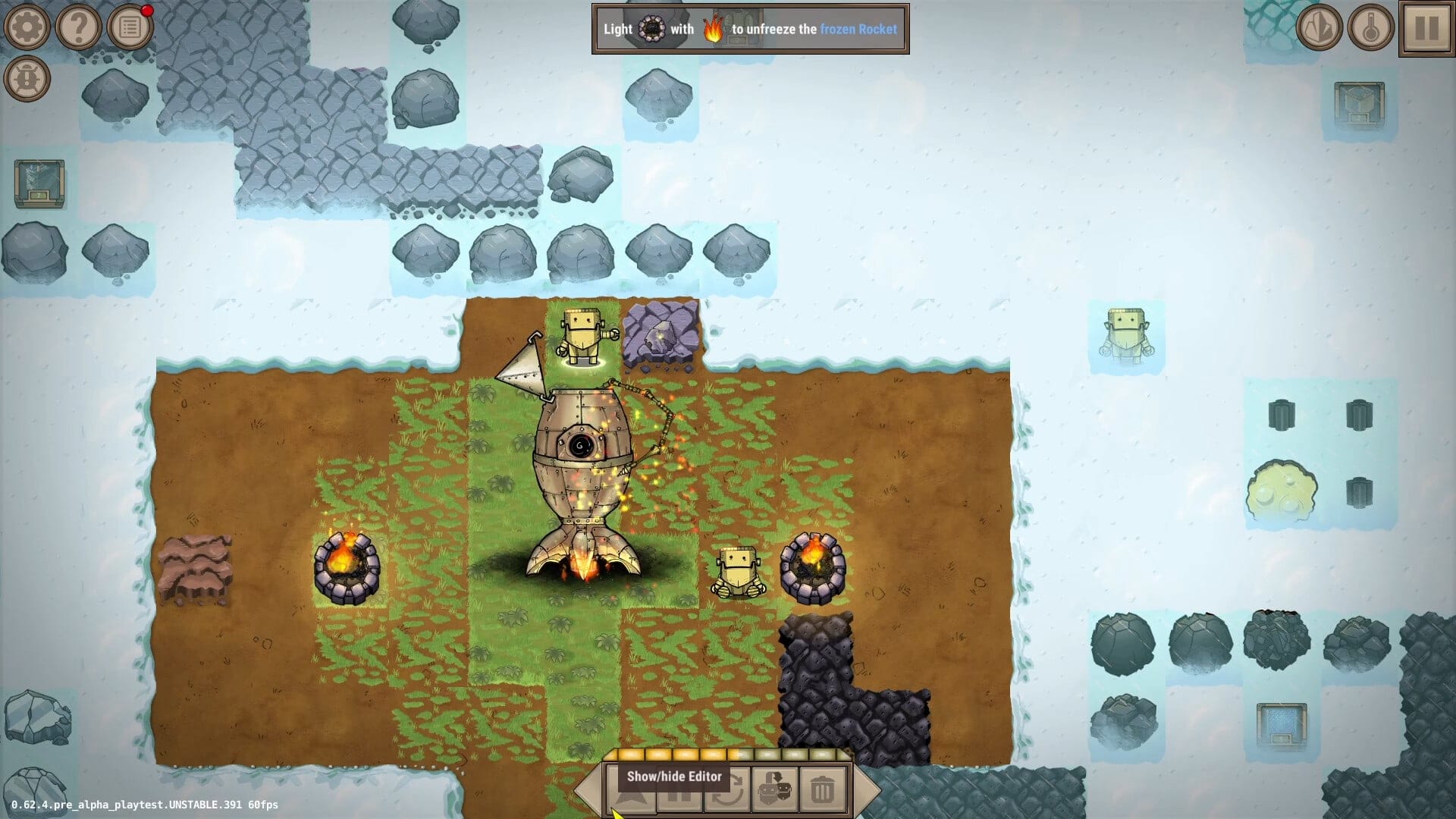
Visually program little robots to gather, craft and terraform a frozen planet back to life.
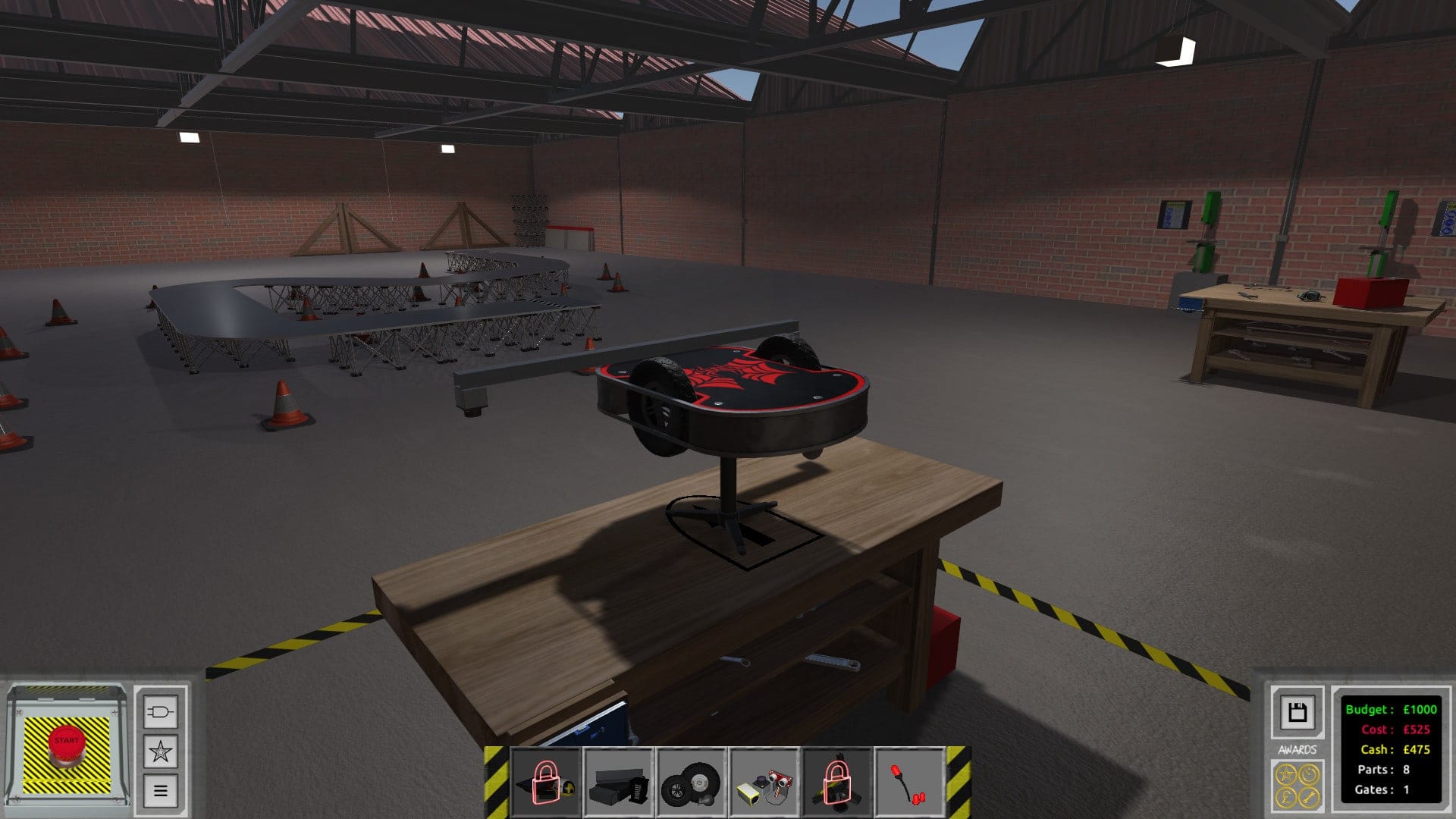
Build robots and wire them with logic gates to solve physics puzzles — AND, OR and NOT instead of a controller.
ChipWits and Robo Instructus are closer to direct robot programming. Autonauts and Craftomation 101 are automation sandboxes where many small workers become a production system. LogicBots and God is a Cube lean into circuits, logic and spatial behavior.
## What robot games teach
They teach sensing because a robot rarely has perfect information. You need to decide what to look for and what to do when the sensor returns nothing. They teach control flow because every robot needs a loop: observe, decide, act, repeat. They teach state because the robot may need to remember a target, a route, a mode or a previous failure.
They also teach humility. A robot that looks smart in a test arena can fail spectacularly in a new situation. That is not wasted time; it is the exact feedback loop real robotics, game AI and automation code all require.
## Text code or visual robot logic?
Text-code robot games are best when you want transferable programming practice. Robocode, Battlecode, Battlesnake and Scalatron make you think about classes, functions, APIs, events and testable behavior. They can be rougher at first, but the habits carry into ordinary software work.
Visual robot games are better when you want to focus on decision structure without syntax. Gladiabots, LogicBots and some automation sandboxes still teach conditions, priorities and state machines; they simply show the logic as nodes, gates or behavior rules. For younger players or visual thinkers, that can be the difference between frustration and flow.
## A good starter path
- →Start with Lightbot or Human Resource Machine if you need basic sequencing first.
- →Try Gladiabots if you want robot battles without text syntax.
- →Try Robocode if you want classic code-first tank AI.
- →Try Autonauts if you want friendly worker automation.
- →Try Battlecode or Battlesnake if you want modern competitive bot programming.
The right path depends on whether you want competition or construction. Competitive players should move toward Robocode, Battlecode and Battlesnake. Builders should move toward Autonauts, Craftomation 101 and Robo Instructus.
## Final picks
For a first robot programming game, choose Gladiabots if you want visual AI, Autonauts if you want cozy automation, or Robocode if you want a real code arena. For historical context, play with Core War. For a serious modern challenge, look at Battlecode and Battlesnake.
The appeal is simple and lasting: when the robot finally behaves, you can see your thinking walking around outside your head.