The best programming games do more than dress a tutorial in pixel art. They make code the controller: you write logic, the game runs it, and the result tells you whether your thinking was clear enough. This guide ranks the programming games worth starting in 2026 and explains who each one is really for.
## What counts as a programming game
A programming game should make code, scripts or structured instructions the primary way you play. That is a stricter definition than “a game that teaches coding.” A quiz about syntax can be useful, but it is not the same thing as a game where your program pilots a unit, routes a factory, solves a level, queries a database or survives against another player’s bot.
The strongest games in this genre all share the same loop: read the rules, write a first attempt, run it, watch it fail in a specific way, and improve the model. That loop is close to real engineering. You learn to decompose a problem, name state, handle edge cases and refactor when the first working version becomes too rigid.
For this list, we prioritized games that remain playable, have a clear programming core, give useful feedback and reward better thinking rather than faster reflexes. Some use real languages such as JavaScript, Python, SQL or Java. Others use visual blocks or fictional assembly. Both can be valuable if the game makes your decisions visible.
## Best overall programming games in 2026
These are the games most worth recommending first because they combine a strong learning loop with enough depth to stay interesting after the basics click. They cover very different tastes: beautiful open-ended machines, persistent JavaScript automation, low-level assembly puzzles, scripting-heavy incremental play and beginner-friendly visual logic.

Build and program elegant alchemical machines, then optimise them for cost, cycles and area. The most approachable Zachtronics.
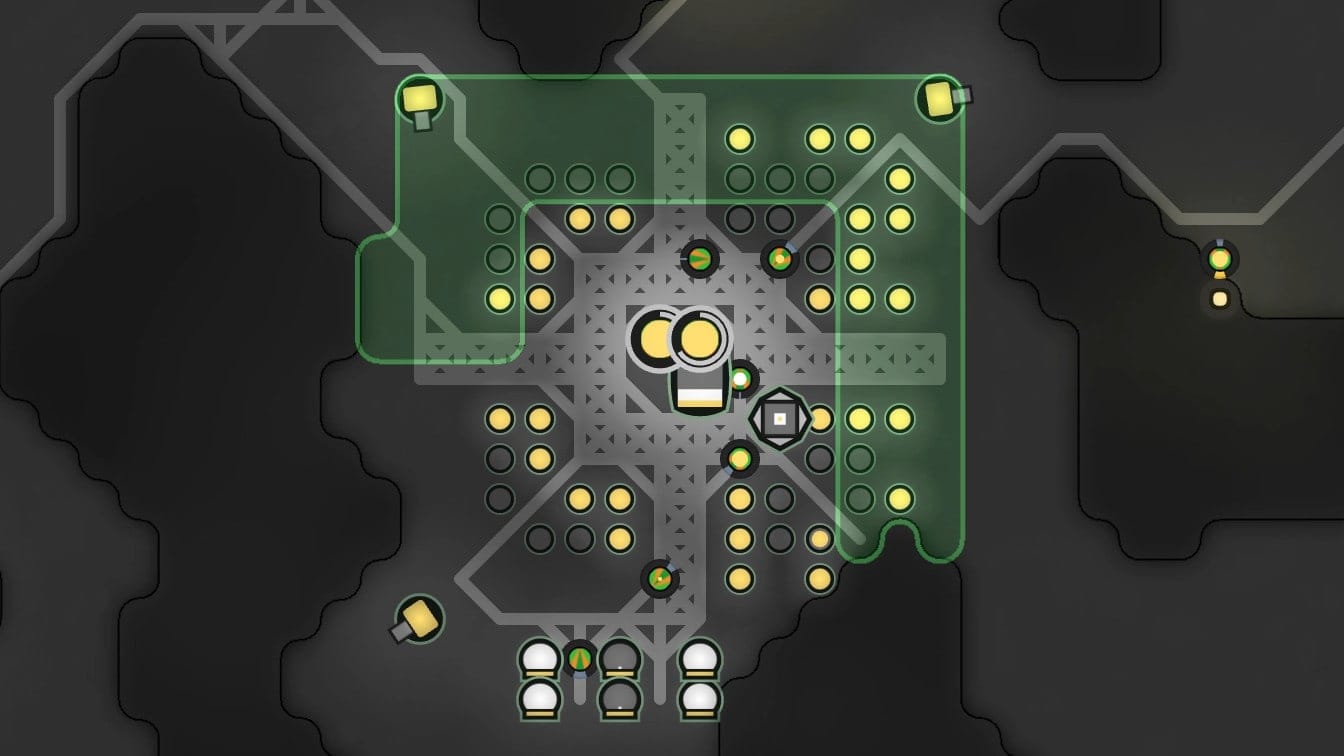
An open-source MMO RTS where your units are driven by JavaScript you write — and the world keeps running 24/7, even while you sleep.
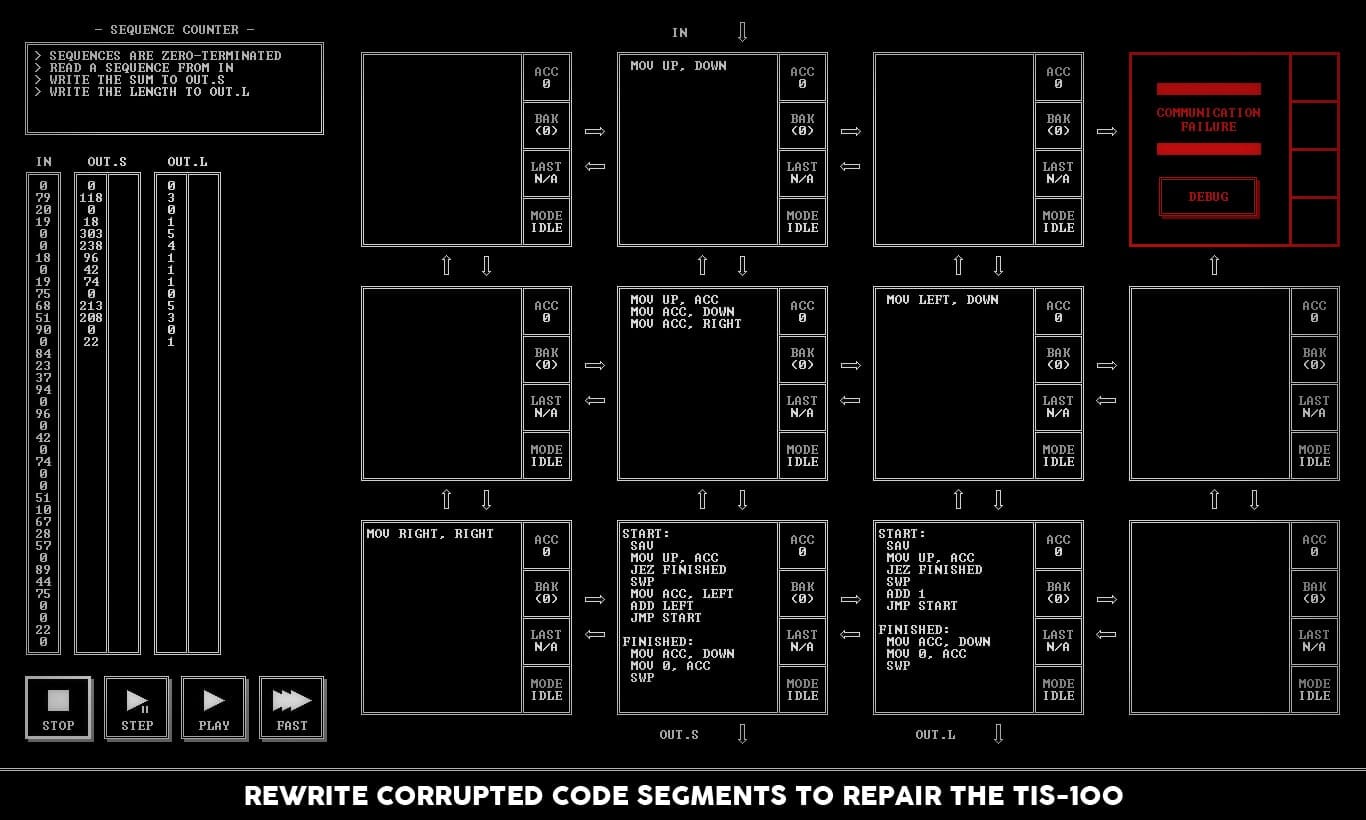
Reverse-engineer a corrupted parallel computer by writing assembly for its tiny nodes. Zachtronics’ cult open-ended assembly puzzler.
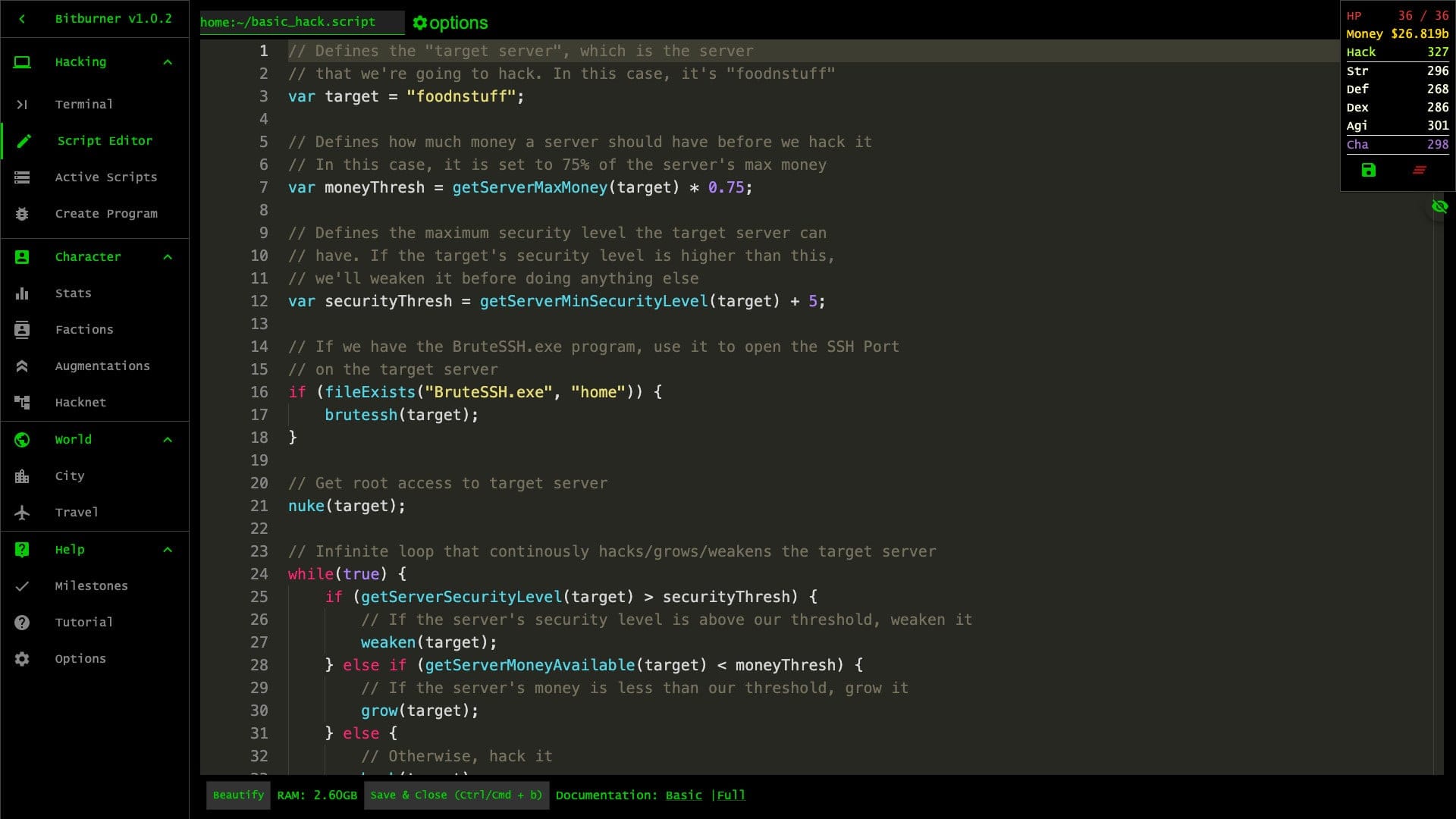
A programming-based incremental: script your way through a cyberpunk net, automate hacking with a NetScript API, and break the simulation.
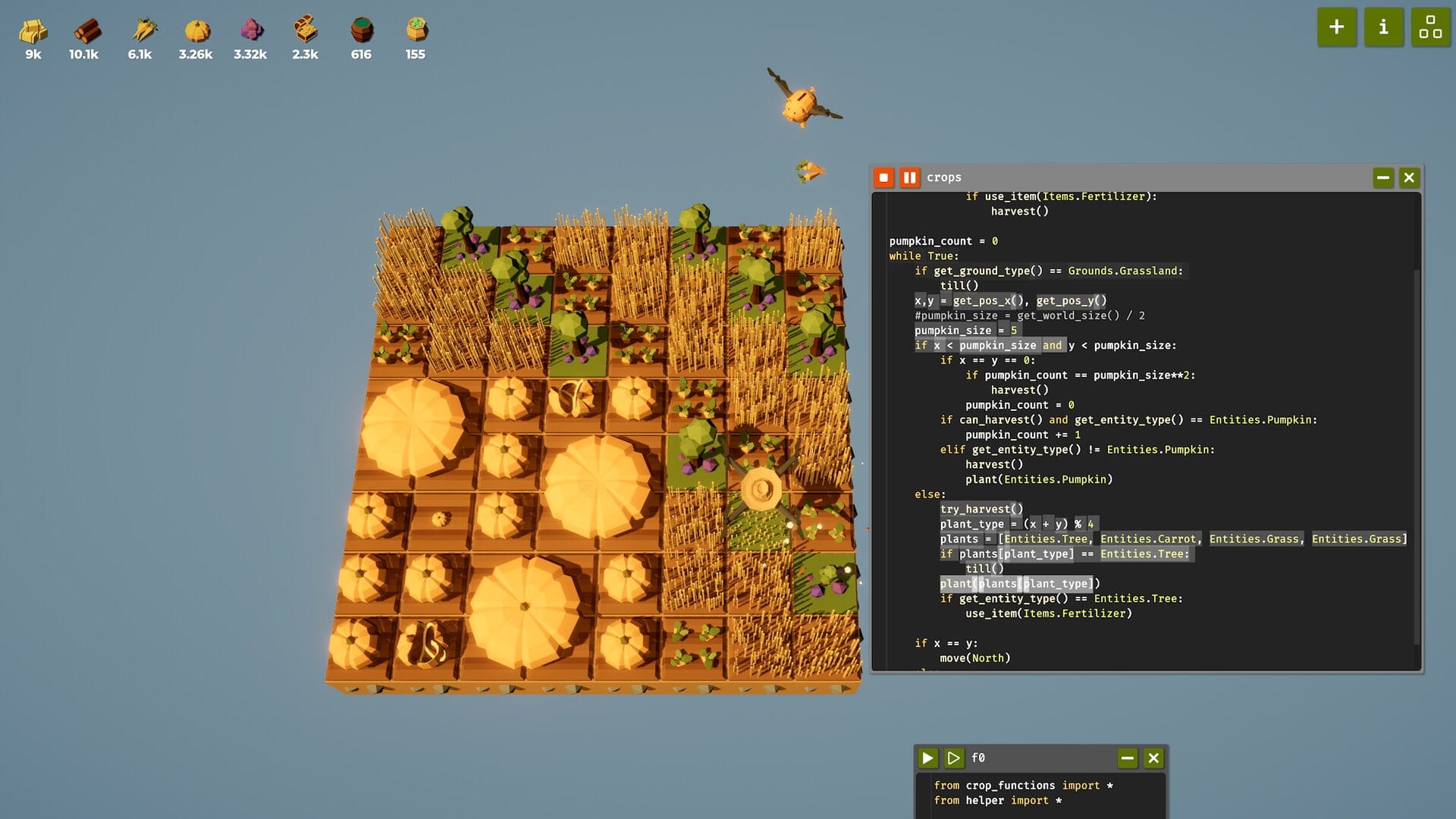
Program a drone to automate an entire farm. Plant, harvest, optimise — then watch your code outgrow you.
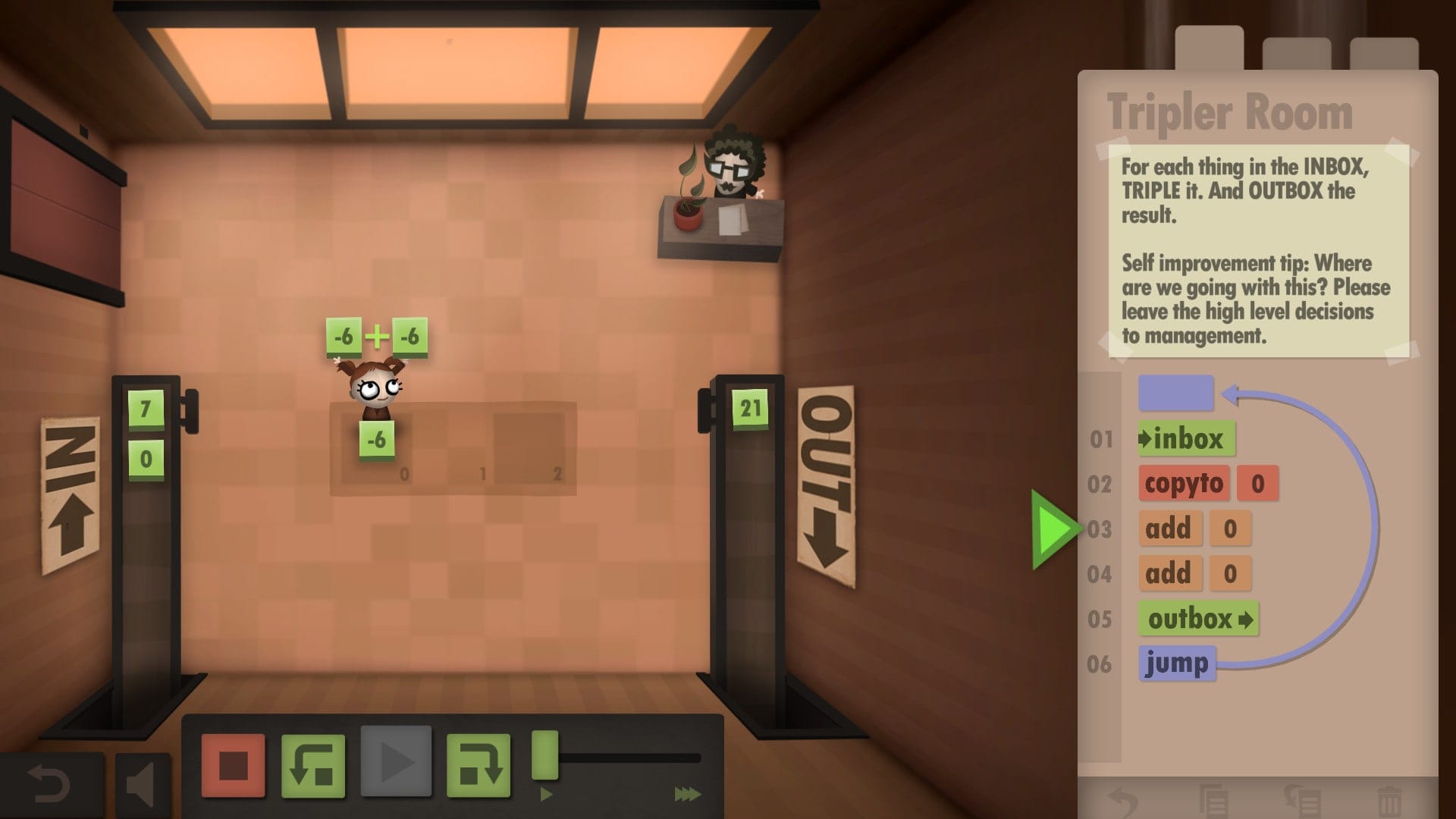
Drag visual instructions to automate your white-collar job. A gentle, beautifully made intro to assembly thinking — no syntax required.
Opus Magnum is the easiest Zachtronics game to love because it gives you space to be expressive. You build an alchemical machine, watch it run, then decide whether to optimize for cost, cycles or footprint. Screeps is the opposite kind of commitment: a persistent JavaScript MMO where your colony keeps executing your code after you close the tab. TIS-100 remains the purest low-level puzzle box, and Bitburner is one of the best free routes into automation because the grind quickly becomes a JavaScript architecture problem.
The Farmer Was Replaced deserves a spot because it turns Python-like automation into an approachable farm loop. Human Resource Machine is still the cleanest “I have never programmed before” starting point: no syntax, no setup, just instructions, loops and jumps made visible.
## Choose by what you want to learn
The best starting point depends on the skill you want to practice. If you want transferable language practice, pick a game that runs real code. If you want algorithmic thinking without syntax anxiety, start visual. If you want to understand what computers do beneath your usual language, assembly games are brutally effective.
- →New to programming: Human Resource Machine, Lightbot, then CodeCombat.
- →Want Python practice: The Farmer Was Replaced, CheckiO, CodeCombat and CodinGame.
- →Want JavaScript automation: Bitburner first, Screeps when you want a long-term project.
- →Want low-level thinking: TIS-100, SIC-1, SHENZHEN I/O and EXAPUNKS.
- →Want visual optimization: Opus Magnum, SpaceChem, Infinifactory and 7 Billion Humans.
- →Want competitive bot programming: CodinGame, Robocode, Battlecode and Battlesnake.
## Real code or puzzle language?
Real-code games are excellent when you already know enough syntax to be dangerous. Screeps, Bitburner, CodinGame, Battlecode, Robocode and SpaceTraders make you read APIs, structure files and debug logic in a way that feels close to ordinary development. They are especially good for players who want a portfolio-adjacent project or a reason to write more JavaScript, Python, Java, Rust or SQL.
Puzzle-language games are better when you want the idea isolated. TIS-100 does not teach you a production assembly dialect, but it absolutely teaches data movement, loops, memory pressure and the cost of instructions. Human Resource Machine is not a professional language, but it teaches sequencing and control flow cleanly. Opus Magnum is visual, yet the way you reason about timing and repeated operations feels deeply programmatic.
A healthy path is to mix both. Use visual and fictional-language games to sharpen the mental model, then use real-code games to build fluency with tooling, documentation and larger programs.
## A sensible beginner path
If you are new, start with games that give immediate visual feedback. Human Resource Machine teaches the idea that a program is a list of precise instructions. Lightbot turns sequence, loop and procedure into movement puzzles. CodeCombat then bridges the gap into typed code by letting you issue commands in Python or JavaScript while still seeing the result as a game scene.
After that, move to a game with more open-ended solutions. The Farmer Was Replaced is a good next step because you automate something concrete: planting, harvesting and improving a farm. Bitburner is another strong option if you like incremental progress and do not mind reading API docs. Only after those loops feel comfortable should you jump into a persistent MMO such as Screeps, where your codebase quickly becomes a real project.
## Final recommendation
If you can only pick one programming game in 2026, pick Opus Magnum for elegant puzzle design, Bitburner for free JavaScript automation, or Screeps for the deepest long-term coding project. Pick Human Resource Machine if you are starting from zero. Pick TIS-100 if you already program and want a game that makes you think smaller, clearer and more deliberately.
The real value of the genre is not that it magically teaches programming without effort. It makes effort enjoyable. You still have to debug, read rules, test assumptions and rewrite bad ideas. The difference is that every improvement moves a machine, colony, robot, query or character you can see.